Is Morocco a good place to live? For most people with the means to live well, yes, with clear conditions: private healthcare, residency paperwork and a real cultural adjustment. This guide sets out those conditions and the figures behind them, for anyone weighing Morocco as a main home or as a place to spend part of the year.
Why people choose to live in Morocco, and what the numbers say
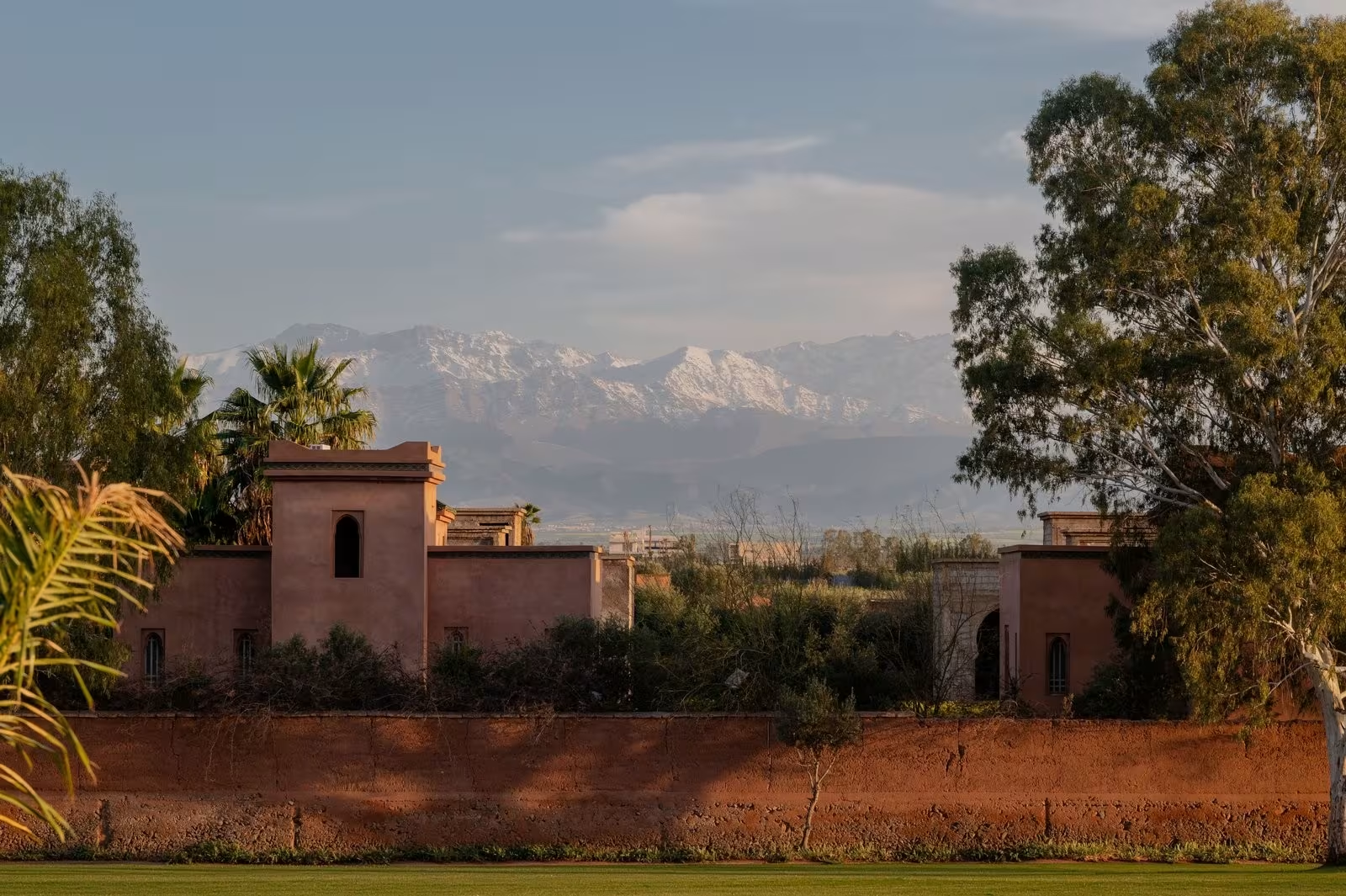
The reasons people give are rarely about money first. Morocco offers a warm, dry climate for much of the year, a slower pace of life and a short flight to most European capitals. Add the warmth and hospitality of Moroccan people, and landscapes that run from the Atlantic coast to the edge of the Sahara, and the appeal is easy to see.
For anyone moving abroad, that feeling needs a counterweight. Numbeo’s 2026 mid-year indices, built from user-reported data rather than official statistics, give a useful outline of what life in Morocco looks like on paper.
| Indicator | Morocco | How to read it |
|---|---|---|
| Quality of life index | 112.9 (rank 47) | Overall score and global rank |
| Climate index | 90.3 | Higher is better; a very high score |
| Cost of living index | 31.3 | Lower means cheaper day-to-day costs |
| Health care index | 46.8 | Higher is better; a middling score, consistent with limited public care |
| Safety index | 52.9 | Higher is better; a moderate score |
| Pollution index | 68.7 | Lower is better; a high score |
| Property price-to-income ratio | 13.6 | Lower is more affordable; housing is expensive relative to local incomes |
User-reported indices, 2026 mid-year.
Read on its own terms, the picture is clear. The climate score is very high and day-to-day costs are low, while the healthcare score sits in the middle, pollution is high and perceived safety is moderate.
Stability is the other thing people ask about first. In the 2026 Global Peace Index, Morocco ranked 65th of 163 countries, up 20 places on the year before and first in the Maghreb. For a long-term home, that direction of travel matters as much as the rank itself.
Is it safe to live in Morocco?
Broadly, yes, with the precautions you would take in any busy country. The Global Peace Index ranking above points to a stable country, and the same user-reported indices give Morocco a perceived-safety score of 52.9, a moderate result.
Official travel advice is specific about the safety concerns that remain:
- Petty crime, including pickpocketing and bag-snatching, in tourist areas and medinas.
- A terrorism threat that the advice assesses as likely.
- Unwanted attention that women may face in public.
Natural hazards belong in the same assessment. The 2023 earthquake killed nearly 3,000 people. The same advice warns of flash floods in mountain areas in winter and wildfires in summer, which matters to anyone who plans to spend weekends in the Atlas Mountains.
None of this is a reason to stay away. It is the context in which residents choose a neighbourhood, a building and their daily routines, and most of it shapes habits rather than decisions.
What it costs to live in Morocco
Day-to-day costs are where the country is easiest to like. On the same indices, Morocco’s cost-of-living score is 31.3, which means everyday spending on food, transport and services is markedly lower than in Western Europe.
Housing tells a different story. The property price-to-income ratio of 13.6 shows that quality homes are not cheap relative to local incomes. Affordability in daily life does not extend to the best addresses.
For the reader this guide is written for, the budget question is less about groceries than about three larger lines:
- Private health insurance, which foreign residents should treat as essential.
- A well-located home, bought or rented.
- Travel, for family visits and time spent in other bases.
Monthly budgets quoted across the expat community vary so widely that they say more about the writer than about the country. It is more useful to price those three lines against your own circumstances, then treat everything else as the pleasant surprise it usually is.
Healthcare for expats: strong private care, limited public care
Official travel advice for Morocco puts it plainly: “Public health facilities in Morocco provide limited medical care. Private clinics are available and operate to a higher standard.” In practice, residents who can choose use the private sector.
A few practical points from the same advice:
- Pharmacies in the cities open around the clock.
- Some prescription medicines available at home may not be available locally, so bring a supply and check before you move.
- The ambulance number is 150.
Official guidance for foreign residents is equally clear that private health insurance is essential. Arrange cover before you arrive, not after your first appointment.
The public system is changing. The Moroccan government reports that mandatory health insurance now covers about 88% of the population, and the health budget reaches 42.4 billion dirhams by 2026, more than four times its 2010 level. That coverage serves residents enrolled in the national scheme, so foreign residents should still plan on private cover.
Visa rules, residency and tax for foreigners in Morocco
Can you simply move here? The paperwork is manageable, but it runs on fixed thresholds, and each one is worth knowing before you book a one-way flight.
Holders of passports that are visa-exempt for Morocco can stay up to 90 days on arrival, with a passport valid for at least three months after entry. To stay in Morocco longer, you request an extension at a Moroccan police station, according to official travel advice. Whether your passport qualifies is a question for the Moroccan embassy or consulate in your country.
Beyond the 90-day tourist allowance, official guidance for foreign residents sets out the next step: register with the police and apply for a residence permit, the Carte d’Immatriculation. Applying for residency takes 10 passport photographs, two legalised copies of your documents and a fee. A temporary card valid for three months is issued while the application is processed.
Tax follows its own logic. Under Morocco’s tax residence rules, you become tax resident if you have a permanent home in the country, if your centre of economic interests is there, or if you spend more than 183 days there in any 365-day period. Your residency status for immigration and your tax status are separate questions.
Before you settle, check whether your country of residence has a double taxation agreement with Morocco, and take advice from a tax professional who knows both systems. The thresholds, side by side:
| Time in Morocco | What applies |
|---|---|
| Up to 90 days | Holders of visa-exempt passports visit without further formalities; passport valid 3 months beyond arrival; confirm your passport’s status before you travel |
| Beyond 90 days | A police extension, or police registration and the Carte d’Immatriculation; a temporary 3-month card while it is processed |
| More than 183 days in any 365, or a permanent home or centre of economic interests in Morocco | Moroccan tax residence |
Most people who plan ahead find the sequence straightforward. The difficulty usually comes from leaving the registration until the last week of the 90 days.
Moroccan law and culture: things to know before you move
Morocco is a Muslim country with deep traditions, and some of its laws differ sharply from those many newcomers are used to. Official travel advice lists the ones a resident lives with:
- Same-sex relations are illegal.
- Drinking alcohol outside licensed venues is illegal.
- During Ramadan, public conduct follows stricter norms, and residents are expected to respect them.
These are facts to plan around rather than debate. The people who settle happily tend to be the ones who knew them before they arrived.
Day to day, Moroccan culture draws on Arab and Berber traditions, and guests are taken seriously. Moroccans tend to be warm toward people who stay, learn a few words and come back. The culture shock is real, and manageable for anyone who arrives expecting it.
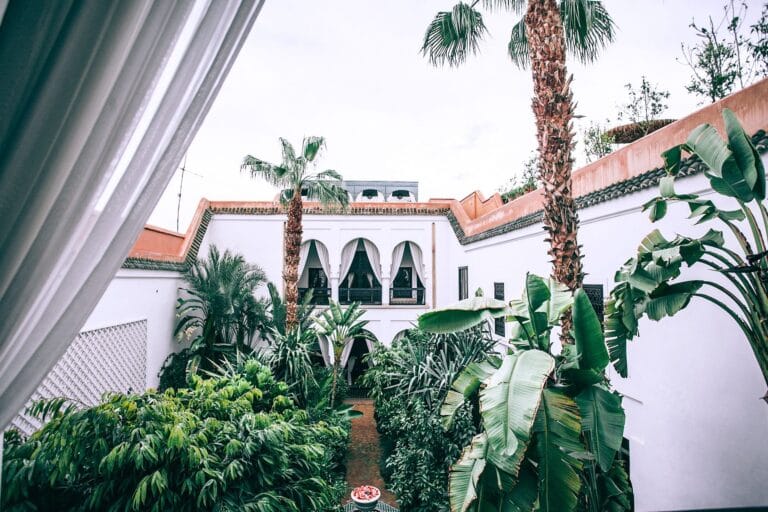
Much of that texture lies in the contrast between old and new. The medina keeps a traditional Moroccan rhythm of markets, workshops and the neighbourhood hammam, while the new towns run on cafés, offices and wide avenues. Most residents move between both every week.
Choosing a place to live: Marrakech, Rabat, Tangier and the coast
For many international buyers the search starts in the Red City. It combines an international airport, a wide choice of homes and a way of life that suits both full-time and part-year residents.
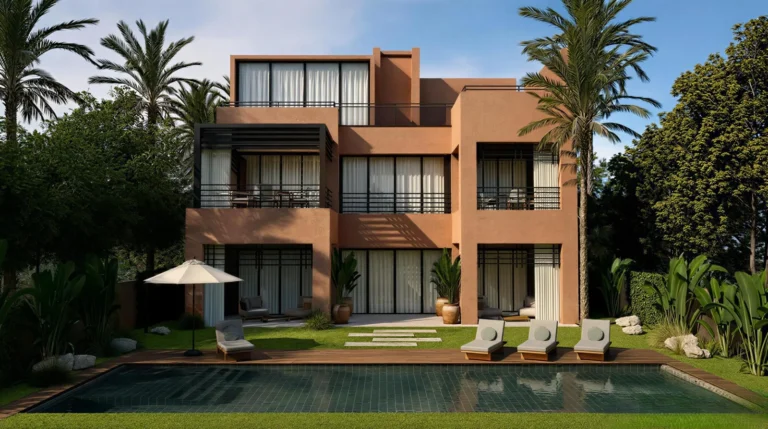
Within the city, two patterns dominate. An apartment in Guéliz puts you in the everyday city, close to restaurants and services. A villa with a garden outside the city centre trades that convenience for space and privacy. Our guide to where to live in Marrakech covers the districts in more detail.
Connections are improving. Railway Gazette International reports that the 430 km high-speed extension from Kénitra to Marrakesh, via Rabat and Casablanca, is planned for full commissioning in November 2029, bringing Tangier within 2 hours 40 minutes of Marrakesh by train.
Other places in Morocco suit different lives:
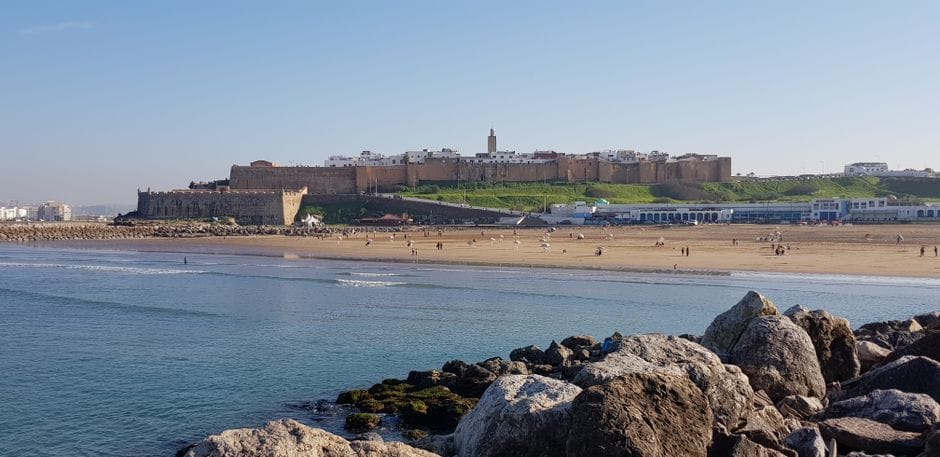
- Rabat, the capital: calmer and administrative in character.
- Casablanca: the business centre, for those who keep working while they live here.
- Tangier: the northern gateway, facing Europe across the Strait of Gibraltar.
- Essaouira and Agadir: the Atlantic coast, for those who want the beach and sea air.
- Fez: history, craft and an older, slower city.
The right choice often comes down to how you will spend your weeks. A place near an airport and a train station counts for more than a view if you plan to travel often.
Owning property in Morocco when you live there part of the year
Many people who choose Morocco will not live here all year. For them the practical questions change: who looks after the home while they are away, and whether it can be let while it stands empty.
Both have workable answers. A local rental management service can cover letting, upkeep, staff and accounts, so the house is ready when you return and earning when you are not.
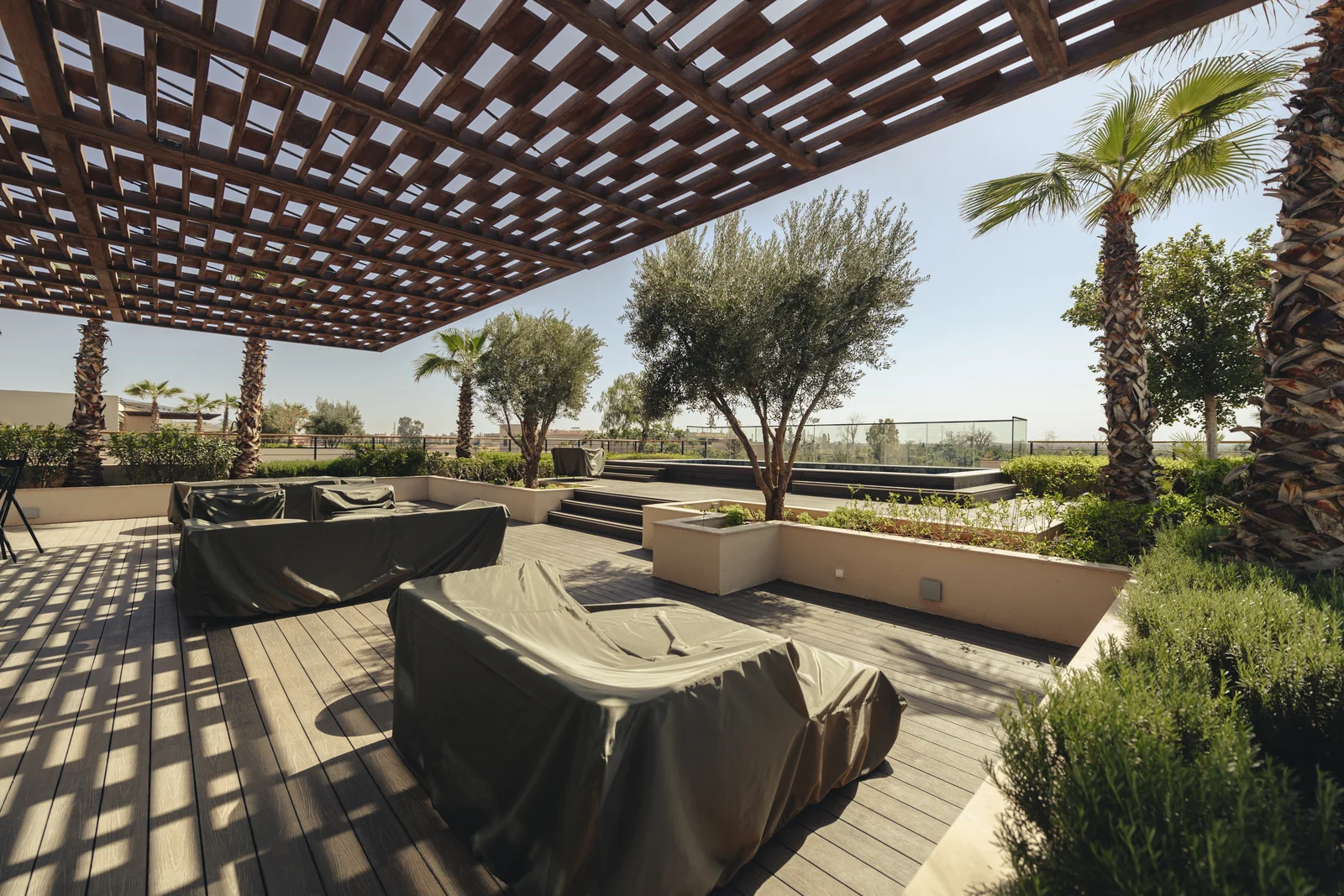
The calendar matters too. Staying under 183 days can help keep you non-resident for tax, but it is only one of the three tests described in the residency section, and a permanent home is another. Have an adviser look at your pattern of stays and your ownership together.
If you have not bought yet, the full ownership process is set out in our buying guide.
So, is Morocco a good place to live?
It depends on what you need from a home. Morocco suits people who want sun, space and a slower pace within easy reach of Europe, and who are ready to insure privately and handle the residency paperwork.
It suits less well those who depend on public healthcare, who would find conservative public norms hard to live with, or who would rather avoid a residence application altogether.
What to know before moving to Morocco comes down to a handful of thresholds: 90 days, police registration, 183 days, and private insurance from the first day. Get those right, and the decision to move to Morocco becomes a question of where, not whether.
Originn Properties advises international buyers in Morocco, as well as in Dubai and Jeddah. If Morocco is on your shortlist, speak with our advisory team about where and how to live there, and about your other bases if you are weighing more than one.
Other questions to settle before you move to Morocco
Is Morocco a good place to retire?
For many retirees Morocco is a good place to retire, provided private healthcare is part of the plan. According to PwC’s Worldwide Tax Summaries, reviewed in April 2026, tax residents receive an 80% reduction in income tax on foreign pensions repatriated to Morocco. Ask your pension provider how payments abroad work before you move.
Can foreigners buy a home in Morocco?
Yes, foreign buyers can own homes in Morocco. Official guidance for foreign residents notes two limits: non-Moroccan buyers generally cannot own agricultural land, and a Moroccan notary must handle the transaction. Our guide to buying property in Morocco as a foreigner sets out the full process.
Can I speak English in Morocco?
English works in hotels, restaurants and the places visitors go, but it is not the language of daily life. Morocco’s constitution makes Arabic and Amazigh the official languages, everyday speech is Moroccan Arabic, quite different from Modern Standard Arabic, and French runs through much of the paperwork. Residents who speak French or learn Darija find errands, paperwork and neighbours far easier. For an English speaker asking is Morocco a good place to live, a few months of lessons changes the answer more than almost anything else.